
Seamless
Coal-to-Gas
Conversion
Efficient & Reliable
Heat Transfer—Engineered
for the New Fuel Reality
Flue gas cooling and waste heat recovery
Capturing waste energy to lower the cost of carbon capture
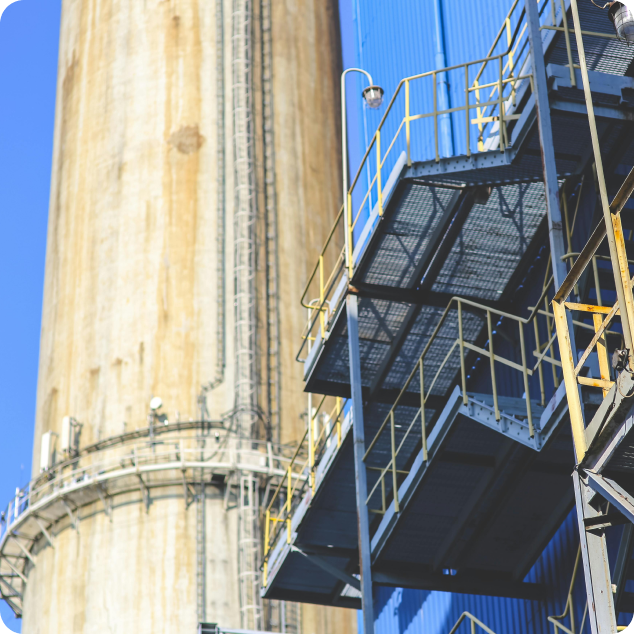
Converting a coal-fired unit to natural gas fundamentally changes how heat must be recovered and managed. Many of the design requirements critical for coal firing—such as extreme fouling resistance and soot blower tolerance—are no longer dominant once gas firing is introduced. Instead, two priorities take center stage: maximizing thermal efficiency and minimizing pressure drop.
LJUNGSTRÖM air preheater solutions are specifically engineered to meet these new objectives. By selecting heat-transfer surfaces optimized for gas firing and reconfiguring airflow where appropriate, significant fuel savings can be realized—often exceeding 1%—while simultaneously reducing carbon emissions.
Designed to Protect
Efficiency and Capacity
Coal-to-gas conversions frequently expose hidden limitations in legacy air preheater designs. In particular, fan capacity constraints can limit generating capacity if pressure drop is not carefully managed. LJUNGSTRÖM addresses this risk through engineered surface selection and airflow optimization that delivers the greatest possible heat recovery without exceeding specified pressure-drop limits—preserving both efficiency and output.
Key Outcomes Include:
- Reduced fuel consumption, directly lowering operating costs
- Corresponding reductions in carbon emissions with every unit of fuel saved
- Increased generating capacity by minimizing or eliminating fan-capacity restrictions
Heat Transfer Surface Selection: Coal vs. Gas
Coal-fired air preheaters must withstand highly corrosive, fouling-prone environments and the mechanical forces of soot blowing and water washing. Gas firing removes many of these constraints, enabling a more focused, efficiency-driven design approach.
Coal-Fired Surface
Design Requirements
- Thermal efficiency
- Cleanability
- Corrosion resistance
- Soot blower tolerance
- Limited pressure drop
Gas-Fired Surface
Design Requirements
- Thermal efficiency
- Limited pressure drop
By substituting gas-optimized heat-transfer surfaces, plants can unlock higher efficiency while avoiding unnecessary pressure losses that erode unit performance.
Trisector to Bisector
Conversion Opportunity
A large percentage of units commissioned over the past 50 years utilize trisector air preheater designs, which divide airflow into separate primary air (PA) and secondary air (SA) compartments—an important feature for coal firing, but of limited value after conversion to natural gas
For converted units, this creates a powerful upgrade opportunity.
Trisector-to-Bisector
Conversion Benefits
- Significantly increases available airflow area
- Lowers pressure head required from the forced-draft fan
- Supports higher generating capacity and improved efficiency
The Conversion is Straightforward
and Outage-Friendly:
- PA-to-SA sealing arrangements can be removed using existing assembly cut lines
- The main APH support structure remains unaffected
- Basket removal is not required
- No lengthy unit outage is necessary
Reconfigured inlet and outlet ducting creates a simpler, larger rectangular flow path—increasing airflow area by up to 50% and materially reducing pressure drop
End-to-End Coal-to-Gas Expertise
LJUNGSTRÖM supports coal-to-gas conversions across the full lifecycle:
Engineering evaluation and fuel-change simulations
Gas-optimized heat-transfer surface selection
Trisector-to-bisector conversions
Installation and commissioning support
Long-term service, inspections, and upgrades
Compromise
Contact our Heat Transfer experts to evaluate your coal-to-gas conversion
and identify the highest-impact upgrade path.