In power generation and industrial operations, a tremendous amount of value moves through a facility in the form of heat.
How much of that heat are you actually putting to work?
Performance matters more than the quantity of metal
For decades, heat transfer equipment was often evaluated using straightforward physical measures: surface area, material quantity, equipment size, or weight. But modern heat transfer technology has changed that equation.
More material does not necessarily mean more heat recovery. More surface area does not automatically mean better performance. When heat transfer systems are evaluated only on their physical characteristics, operators can miss the metric that ultimately matters most:
How effectively does the system transfer useful energy back into the process?
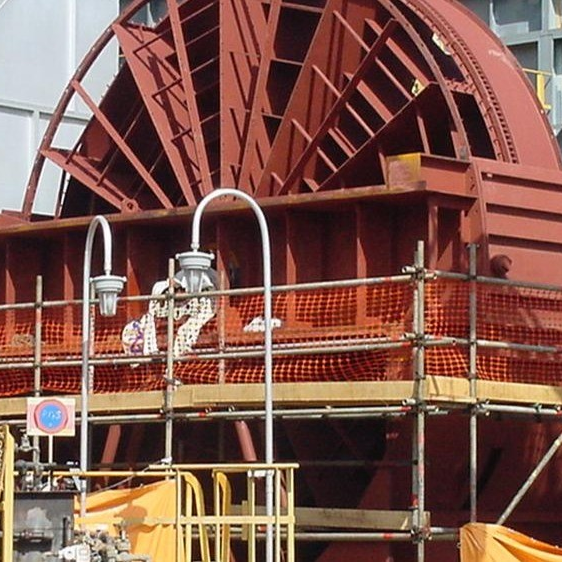
In rotary heat exchangers such as air preheaters and gas-gas heaters, heat transfer performance is influenced not only by the amount of surface available, but also by how gases interact with that surface.
Element geometry affects flow behavior, turbulence, and ultimately the heat transfer coefficient. That means two heating element configurations can contain very different amounts of material while still delivering similar thermal performance.
In fact, comparative evaluations demonstrate that equivalent outlet temperatures can be achieved with significantly different quantities of heat transfer surface and element mass because the efficiency of the profile itself influences performance.
The business implication: Industrial companies should evaluate heat transfer equipment based on the value of the performance it creates, not simply the quantity of metal installed.
Three ways heat recovery can influence financial performance
Heat recovery is often discussed as an efficiency initiative. But its impact can extend much further. For a power plant or industrial facility, better utilization of thermal energy can influence several areas of financial performance.
1. Lower energy consumption improves operating margin
Heat recovered and reused within a process is energy that does not have to be supplied again through additional fuel or another energy source.
When energy represents a significant portion of operating cost, incremental improvements in thermal efficiency can translate directly into improved operating economics.
2. Reduced auxiliary power keeps more production available for sale
An ideal heating element balances high heat transfer with low resistance to flow. Excessive pressure drop can increase the power required by fans and other auxiliary equipment.
The underlying engineering objective is therefore not simply to maximize heat transfer area, but to maximize thermal performance while maintaining favorable flow characteristics.
For power generators, reducing internal energy consumption can mean that a greater portion of generated power remains available for delivery. For industrial facilities, the same principle can reduce the energy required to produce each unit of output.
3. Better heat utilization can support production capacity
In many industrial processes, thermal performance directly affects process conditions.
When heat exchangers become constrained by fouling, pressure drop, or declining thermal performance, the limitation can extend beyond the heat exchanger itself. It can affect the broader process.
Improving heat transfer performance may therefore help operators remove thermal bottlenecks and maintain required operating conditions, particularly in facilities running at high utilization.
The right balance goes beyond heat transfer
There is another part of the heat recovery equation that receives less attention: cleanability and fouling. Increasing surface density can create smaller flow openings. Depending on the application, that can increase pressure drop and the tendency for deposits to accumulate.
That is why the ideal heat transfer surface is not simply the one that transfers the most heat. It is the one that balances:
High heat transfer + Low resistance + Cleanability
That balance can have significant economic consequences. A heat exchanger that performs well thermally but requires frequent cleaning, creates excessive pressure loss, or contributes to unplanned downtime may not deliver the strongest lifecycle economics.
For high-utilization plants, reliability itself becomes a revenue issue. Every avoided production constraint, shortened maintenance event, or additional hour of availability has potential economic value.
Look at what the entire system can accomplish
Heating elements may look like pieces of fabricated metal, but their performance is determined by much more than their weight or surface area.
Different element geometries interact with gas flows differently, creating different heat transfer characteristics. As a result, comparing heating element solutions purely by surface area can be misleading when the underlying technologies are different.
The better question is: What does this heating element allow the entire system to accomplish?
- Does it recover more usable energy?
- Does it reduce pressure loss?
- Does it maintain performance longer?
- Does it reduce fouling risk?
- Does it help the plant maintain output?
What is the financial value of those improvements?
Turning heat recovery into a financial conversation
For plant operators, engineers, and financial leaders, the business case for heat transfer improvements should connect technical performance with operating economics. That means considering:
- Fuel or energy savings
- Auxiliary power requirements
- Plant utilization
- Maintenance frequency
- Production constraints
- The financial value of availability
Even relatively small thermal performance improvements can become meaningful when equipment operates thousands of hours per year. That is particularly true across power generation, refining, chemicals, steel, cement, and other energy-intensive industries where heat is continuously generated, transferred, and, in many cases, lost.
The bigger opportunity: getting more from energy already being purchased
Industrial decarbonization is often associated with major capital projects, entirely new technologies, or new sources of energy. Those investments will continue to play an important role.
But there is another opportunity already moving through industrial facilities every day: the energy contained in heat that has already been produced.
Capturing more of it, transferring it more effectively, and putting it back to work can help facilities reduce energy intensity while improving operating economics.
The objective isn’t simply to install more heat transfer surface. It is to extract more useful value from every unit of energy already entering the process.
Increasingly, that makes heat transfer optimization a revenue, margin, and competitiveness conversation.